Glutathione: What It Is, Benefits, Uses and Side Effects
· Edited by Shahid Hussain

Glutathione is an antioxidant that your body makes itself from three amino acids (glutamate, cysteine and glycine), and it protects your cells from damage.1 You also get a little from food, and it is sold as tablets, creams and drips. In Pakistan it is best known as a glutathione injection for skin brightening. There the proof is limited. Tablets and creams gave a modest lightening in short trials.7 The one placebo-controlled trial of the drip found no clear benefit.8
Thinking about Glutathione Skin Whitening Injection? Ask us on WhatsApp. A doctor gives you an honest answer at a free check-up.
This guide explains what glutathione does, its forms, its benefits, its side effects and who should avoid it, with every fact traced to its source.
What is glutathione?
Glutathione is a tripeptide: a small molecule built from three amino acids, glutamate, cysteine and glycine.1 Your cells make it all day, in two steps. How much they make depends mostly on how much cysteine they have.1
It is the most abundant antioxidant the body makes for itself,4 and the liver holds the main store.2 It comes in two forms that switch back and forth: reduced glutathione (GSH) and oxidised glutathione (GSSG). Inside cells, most of it is GSH.2
What does glutathione do in the body?
Glutathione’s main job is to protect cells from oxidative stress, the damage caused by unstable molecules called free radicals.1 It also:
- helps cells make harmful substances safe and clear them (detoxification);9
- supports the immune response;1
- takes part in making DNA and proteins.1
Low glutathione goes with oxidative stress, which plays a part in ageing and in many illnesses.1 That link does not prove that taking extra glutathione prevents them.
What is glutathione used for?
Glutathione is used in hospitals as a medicine and outside them as a supplement. By injection, doctors have used it for acute poisoning and long-term liver disease.9 In the Philippines, its one approved use as an injection is alongside cisplatin chemotherapy.10
Outside hospitals, people take it mainly for three things:
- Skin brightening. It is widely used for this,2 but the results are modest (see below).
- Antioxidant support. In a six-month trial, daily tablets raised the body’s glutathione stores.4 The trial measured blood levels and immune markers, not whether people stayed healthier.
- Liver health. In a small Japanese study, 29 people with fatty liver took glutathione by mouth for four months and a liver enzyme (ALT) fell. There was no placebo group, and the authors asked for larger trials.9
For everything else you may read about, the evidence is limited.
Which foods have glutathione, and how does the body make it?
Fresh fruits, vegetables and nuts contain glutathione: tomatoes, avocados, oranges, walnuts and asparagus are examples, and whey protein is a rich source.2 But glutathione from food is broken down in the gut and liver, so it is not what sets the level in your blood.3
Your body builds its own supply from amino acids. That is why eating enough protein matters for keeping glutathione at a healthy level.1
Forms of glutathione: tablets, liposomal, sublingual, cream and drip
Glutathione comes in five main forms, and they are not equally well studied. Here is what the research says about each.
| Form | How it is taken | What the evidence says |
|---|---|---|
| Tablets and capsules | Swallowed, usually daily | Mixed. A single 3 g dose did not raise blood levels in one study.3 In a six-month trial of 54 adults, 250 or 1,000 mg a day did raise body stores. Levels fell back within a month of stopping.4 For skin, short trials found a modest lightening.7 |
| Liposomal glutathione | Swallowed as a liquid or capsule, wrapped in tiny fat bubbles | One small study (12 adults, one month), funded by the maker, found higher blood levels.5 It did not test skin. |
| Sublingual glutathione | Dissolved under the tongue | A three-week trial in 20 people found higher blood levels than swallowed glutathione.6 Small, and skin was not tested. |
| Cream or lotion | Applied to the skin | Glutathione at 0.5% lightened skin more than at 0.1% or a placebo. The effect stays where you apply it, with minimal side effects.7 |
| IV drip (glutathione injection) | A slow drip into a vein, given by a doctor | The weakest evidence for skin. The only placebo-controlled trial found no clear benefit,8 and a 2025 review advised against it for skin lightening.7 |
Is glutathione good for the skin?
Glutathione may brighten skin a little, but the proof is limited. It slows tyrosinase, the enzyme that makes dark pigment, and shifts the skin towards a lighter type of melanin.2 In trials, the results were modest:
- Tablets: in trials, 250 to 500 mg a day lowered the skin’s melanin reading more than a placebo did.7
- Creams: glutathione at 0.5% worked better than a weaker strength or a placebo.7
- Drip: in a trial from Multan, people had glutathione with vitamin C twice a week for six weeks. Of them, 37.5% had lighter skin, against 18.7% given a salt-water drip. That gap was too small to be sure the glutathione caused it.8
A 2025 review of all the research called tablets and creams moderately effective, and advised against the drip for skin lightening.7 Glutathione can brighten your own tone. It cannot change the skin colour you were born with, and melasma and dark spots need treatments that work on the pigment itself.
Is glutathione skin whitening permanent?
No, glutathione skin whitening is not permanent. In the drip trial, most of the change had faded six months later.8 The 2025 review found that the effect of tablets and creams does not last either.7
The body does not hold on to extra glutathione. In the tablet trial, stores were back to their starting level a month after people stopped.4 Your skin also keeps making pigment, most of all in the sun, so daily sunscreen does more to keep a brighter tone than any supplement.
What is the bad side effect of glutathione?
The most serious side effects reported with glutathione come from the injectable form. By form:
- Creams: minimal side effects in trials.7
- Tablets: more side effects than creams, according to the same review.7
- Drip: usually a small bruise where the cannula went in. In the Multan trial, some people had liver blood test changes and one had a severe allergic reaction.8
Regulators have warned about injectable glutathione for skin lightening. The Philippine FDA says it has approved no injectable product for skin lightening. Among the risks, it lists harm to the liver, kidneys and nerves, and a rare severe skin reaction (Stevens-Johnson syndrome). It also warns of infections when a drip is given by untrained hands or in a place that is not sterile.10
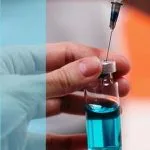
In the United States, the FDA reported in 2019 that seven patients fell ill within minutes of a glutathione drip made from supplement-grade powder. One needed hospital care.11 So what is in the vial, and who gives it, matters.
Who should not take glutathione?
Our doctors do not give a glutathione drip during pregnancy, breastfeeding or cancer treatment. Nor do they give it with liver or kidney disease, asthma or a history of allergic reactions. If any of these apply to you, or you take regular medicines, ask your doctor before starting glutathione tablets as well.
Glutathione in Pakistan
In Pakistan, glutathione is best known as the “gluta drip” or whitening injection, and tablets, creams and soaps are sold in shops and online. A drip is a medical treatment: avoid having one at a salon or at home.
At Cutera Aesthetics, a glutathione injection is always a slow IV drip, never a muscle injection. A doctor checks your health first, and it is offered at all 12 of our clinics. We tell every patient what this guide says: it may brighten your own tone, results vary, and they fade.
Before you decide, read about glutathione injection side effects and see the glutathione injection price in Pakistan. For dullness on the surface of the skin, a glutathione peel works in a different way.
Questions people ask
What is glutathione made of?
Glutathione is made of three amino acids: glutamate, cysteine and glycine. Your cells join them in two steps, and cysteine is the one that usually runs short.1
Is glutathione a vitamin?
No. A vitamin has to come from food, but your body makes its own glutathione from amino acids.1 It is a tripeptide that works as an antioxidant.
How much glutathione should I take per day?
There is no agreed daily dose. Studies of tablets used 250 to 1,000 mg a day,4,7 and the Philippine FDA notes there are no published dosing guidelines for the injectable form.10 These are the amounts researchers tested, not a recommendation: ask a doctor what suits you.
Can I take glutathione and vitamin C together?
Yes, they are often given together, and the drip in the Pakistani trial combined them.8 Vitamin C by injection carries its own risks: it can form kidney stones, and large doses have harmed people with G6PD deficiency.10 A doctor should check for these first.
How long does glutathione take to work?
It takes weeks, not days. The tablet trial measured higher body stores after one, three and six months,4 and the drip trial ran for six weeks.8 Not everyone sees a change in their skin.
Which is better: glutathione tablets or injection?
For skin, tablets and creams have the better evidence. A 2025 review rated them moderately effective and advised against the drip, because of its weak results and its side effects.7 A doctor can tell you which, if any, makes sense for you.
Is glutathione bad for the kidneys or liver?
Harm is not expected in healthy people, but it has been reported with the injectable form. The Multan trial recorded liver blood test changes,8 and the Philippine FDA lists liver and kidney harm among the risks.10 Anyone with liver or kidney disease should not have the drip.
Does glutathione help the liver?
Possibly, but the evidence is limited. In one small study of people with fatty liver, a liver enzyme fell after four months of glutathione by mouth. There was no placebo group to compare.9 It is not a proven liver treatment.
What are the long-term side effects of glutathione?
They are not known: reviewers say the long-term questions are still unanswered.2 The longest tablet trial here ran for six months.4 The Philippine FDA notes a theoretical long-term skin cancer risk, since glutathione changes how the skin makes its protective pigment.10
Talk it through first
Consultations are free. A doctor looks at your skin, checks your health and tells you honestly whether glutathione makes sense for your goal. Find a skin specialist near me, or message us on WhatsApp and we reply.
Medically reviewed by Dr Sadaf Saleem, Dermatologist, FCPS (Dermatology), PM&DC 62494-P; Dr Junaid Rabbani, Dermatologist, PM&DC 44510-S; and Dr Shegref Mushtaq, Dermatologist, FCPS (Dermatology), PM&DC 19827-N
- Wu G, Fang YZ, Yang S, Lupton JR, Turner ND. Glutathione metabolism and its implications for health. J Nutr, 2004.
- Sonthalia S, Daulatabad D, Sarkar R. Glutathione as a skin whitening agent: facts, myths, evidence and controversies. Indian J Dermatol Venereol Leprol, 2016.
- Witschi A, Reddy S, Stofer B, Lauterburg BH. The systemic availability of oral glutathione. Eur J Clin Pharmacol, 1992.
- Richie JP Jr, et al. Randomized controlled trial of oral glutathione supplementation on body stores of glutathione. Eur J Nutr, 2015.
- Sinha R, et al. Oral supplementation with liposomal glutathione elevates body stores of glutathione and markers of immune function. Eur J Clin Nutr, 2018.
- Schmitt B, Vicenzi M, Garrel C, Denis FM. Effects of N-acetylcysteine, oral glutathione and a novel sublingual form of glutathione on oxidative stress markers. Redox Biol, 2015.
- Sarkar R, et al. Glutathione as a skin-lightening agent and in melasma: a systematic review. Int J Dermatol, 2025.
- Zubair S, Hafeez S, Mujtaba G. Efficacy of intravenous glutathione vs. placebo for skin tone lightening. J Pak Assoc Dermatol, 2016.
- Honda Y, et al. Efficacy of glutathione for the treatment of nonalcoholic fatty liver disease: an open-label, single-arm, multicenter, pilot study. BMC Gastroenterol, 2017.
- Food and Drug Administration Philippines. FDA Advisory No. 2019-182: Unsafe use of glutathione as skin lightening agent. 2019.
- US Food and Drug Administration. FDA highlights concerns with using dietary ingredient glutathione to compound sterile injectables. 2019.
Treatments in this article
Sessions, downtime and results for each, on its own page.


Related articles
Ready when you are
Book your free consultation
A doctor checks your skin, hair or body first. No obligation.











 Meet our 50 doctors
We usually reply within 15 minutes.