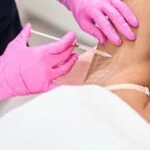
What is PRP for hair, and how does it work?
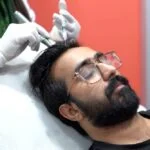
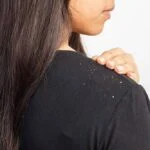
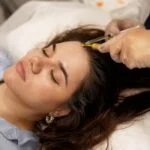
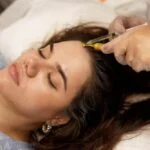
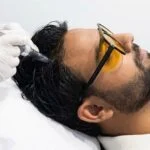
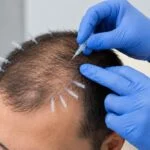
PRP for hair is a treatment that uses the platelet-rich plasma in your own blood to strengthen weakening hair roots, so hair fall slows and thinning hair grows fuller. A small amount of your blood is spun in a centrifuge to separate the plasma, which is packed with platelets. Platelets carry growth factors that drive tissue repair, and placed in the scalp through fine injections they help shrinking hair roots grow stronger hair and stay in their growth phase for longer. Your doctor first finds what is behind your hair loss, such as thyroid problems, low iron, hormones, stress or genes, sometimes with blood tests. PRP can’t regrow a fully bald area.
PRP hair treatment benefits
- Less hair fall: shedding usually slows within two to three months.
- Fuller hair: thinning areas look denser at three to six months.
- Your own blood: allergic reactions are very unlikely.
- For men and women: the crown, the temples and a widening parting.
- Little downtime: most people go back to work straight after.
- Works with other care: pairs well with minoxidil or scalp microneedling.
PRP for hair loss in men and women
In men, genes and hormones make the roots at the temples and crown shrink, so each new hair grows finer and shorter until the root stops. Caught early, PRP helps those roots make stronger hair again, and your doctor may add minoxidil or prescription tablets for a fuller plan. In women, PRP helps female-pattern thinning along a widening parting, and shedding that goes on for months, once your doctor has checked for causes such as low iron, thyroid problems or PCOS; you can ask for a female doctor at any clinic. More in our guide: PRP for hair loss in women. A top-up every three to six months keeps your gains.
Does PRP for hair really work? Before and after results
Yes, for hair that is thinning but still growing. In a placebo-controlled trial in men, three monthly sessions raised hair density by 45.9 hairs per square centimetre. Most people shed less within two to three months, and fuller hair shows at three to six months, because hair grows slowly and in cycles. Without top-ups, the gain fades gradually over the following year. Our patients share their own results in the videos below.
PRP hair treatment price in Pakistan
The PRP hair treatment price in Pakistan at Cutera Aesthetics starts from about Rs 8,400 a session in a course of 3 (Rs 25,190 in all), or Rs 11,995 for a single session, the same at all 12 of our clinics in 7 cities. We do it as PRGF, our signature form of PRP, with scalp microneedling as part of every session, and your consultation is free.
| Option | Single session | Course, a session |
|---|---|---|
| PRP hair treatment: Scalp PRGF+Your own PRGF with scalp microneedling. | Rs 11,995 | Rs 8,400Rs 25,190 for 3 sessionsSave Rs 10,795 |
| PRP hair treatment: PRGF FusionPRGF+ with extra growth factors and vitamins. | Rs 13,995 | Rs 9,800Rs 29,390 for 3 sessionsSave Rs 12,595 |
What decides the PRP hair treatment price in Pakistan?
- The option: Scalp PRGF+ is Rs 11,995 a session, and PRGF Fusion, which adds extra growth factors and vitamins, is Rs 13,995.
- One session or a course: three Scalp PRGF+ sessions booked together cost Rs 25,190, about Rs 8,400 a visit, and three PRGF Fusion sessions cost Rs 29,390, about Rs 9,800 a visit.
- What is included: scalp microneedling is part of every session, and the consultation is free.
- The clinic: it makes no difference; every Cutera Aesthetics clinic charges the same.
Who is a good candidate for PRP hair treatment?
- Good candidates: men and women with early thinning, a widening parting, an early receding hairline or heavier-than-usual hair fall, where the hair is still growing.
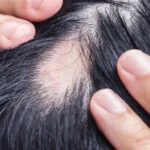
- Not for bald areas: PRP works on the hair you still have, so it can’t regrow a fully bald area where the roots have gone.
- Cause first: your doctor checks for causes such as low iron, thyroid problems, PCOS, stress or genes, sometimes with blood tests, before planning PRP.
- When to wait: hair fall after childbirth or illness often settles without treatment, and your doctor tells you if that is the case.
Who shouldn’t have PRP hair treatment?
PRP isn’t right if you have a bleeding or platelet condition, take blood thinners, are having cancer treatment, have a scalp infection, or are pregnant. Your doctor runs through all of this at your consultation, so your treatment is safe from the start.
Your PRP hair treatment, step by step
- Free consultation: your doctor examines your scalp, asks about your health and may order blood tests.
- Blood sample: a small amount of blood is drawn from your arm.
- Centrifuge: the sample is spun to separate the platelet-rich plasma.
- Numbing: your scalp is numbed first.
- Injections: PRP goes across the thinning areas through fine injections, with scalp microneedling as part of every session; about 45–60 minutes in all.
- Course: usually 4 sessions, about a month apart.
- Top-up: one session every 3–6 months keeps your results going.
Results and recovery
For a day or two your scalp can feel tender, tight or a little swollen, and a bruise may appear, but most people go back to work straight after their session. Results keep improving through the course, and a top-up every three to six months holds the gain.
PRP hair treatment aftercare
- Wait until the next day to wash your hair
- No gym, sauna or steam for 24 hours
- No hair dye or chemicals for a few days
- Avoid ibuprofen for a few days
Why choose Cutera Aesthetics
- Doctor-led: your PRP hair treatment is assessed, planned and performed by our qualified doctors, with female doctors at every clinic.
- Free consultation: an honest assessment and a clear plan before you commit to anything.
- PRP hair treatment near you: at all 12 clinics in 7 cities, at the same price. Find your nearest clinic.
Sources
- American Academy of Dermatology. Hair loss: diagnosis and treatment. Finding the cause, blood tests, and how PRP is given.
- Cruciani M, Masiello F, Pati I, et al. Platelet-rich plasma for the treatment of alopecia: a systematic review and meta-analysis. Blood Transfusion, 2023; 21(1): 24–36.
- Zhou S, Qi F, Gong Y, et al. Platelet-rich plasma in female androgenic alopecia: a comprehensive systematic review and meta-analysis. Frontiers in Pharmacology, 2021; 12: 642980.
- Stevens J, Khetarpal S. Platelet-rich plasma for androgenetic alopecia: a review of the literature and proposed treatment protocol. International Journal of Women’s Dermatology, 2019; 5(1): 46–51.
- Gentile P, Garcovich S, Bielli A, et al. The effect of platelet-rich plasma in hair regrowth: a randomized placebo-controlled trial. Stem Cells Translational Medicine, 2015; 4(11): 1317–23.
Our doctors’ guide to receding hairline