Hair Fall Remedies: What Works and What Doesn’t
The hair fall remedies with the best evidence are minoxidil and, for pattern hair loss, rosemary oil, which matched 2% minoxidil in one 6-month trial. Most other home remedies have little proof. Start by finding the cause: shedding after illness, stress or low iron often settles once the trigger is dealt with.1,2,3
Is my hair fall normal?
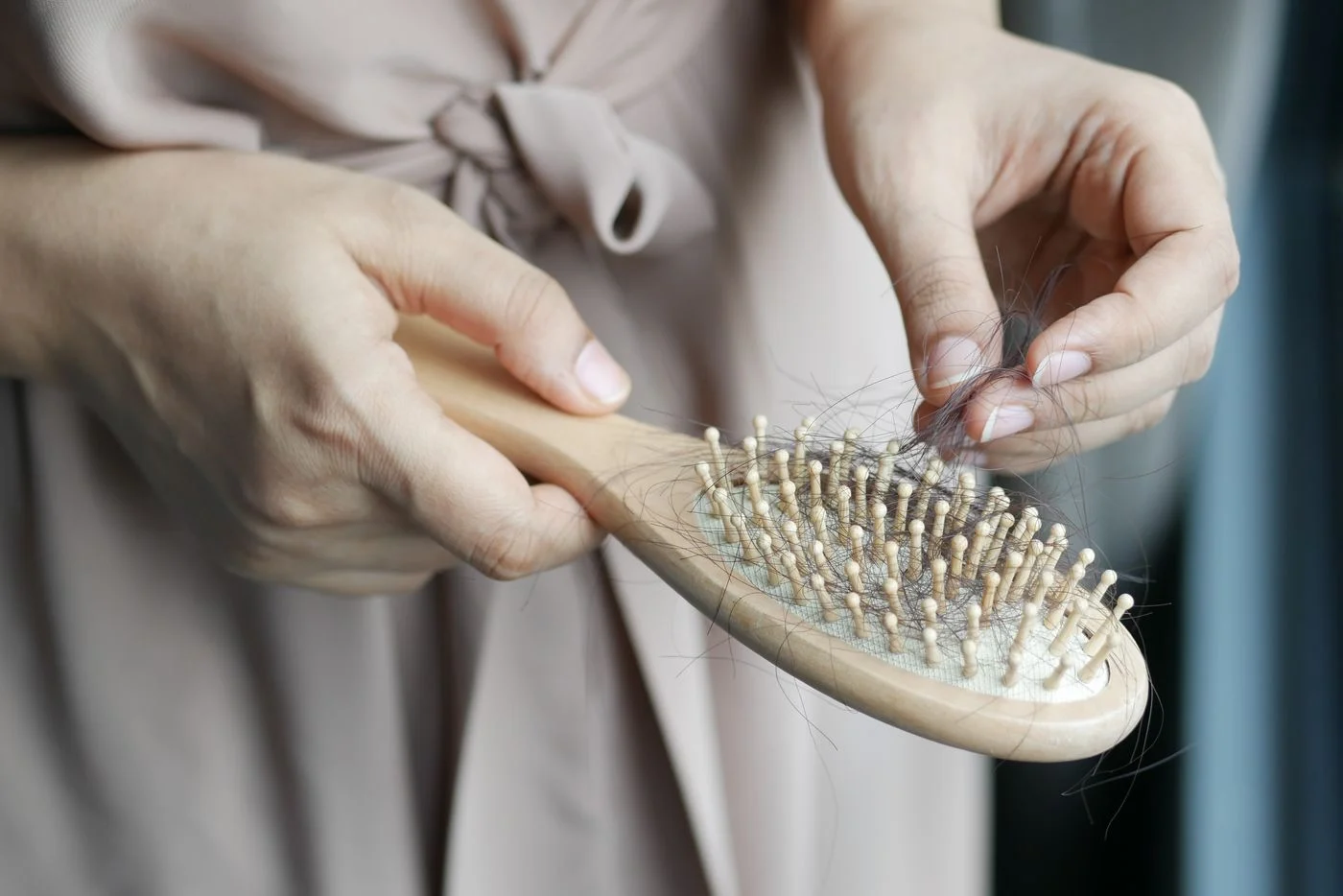
Losing 50 to 100 hairs a day is normal, and you usually won’t notice it.1 It’s worth looking into if you see much more hair than usual on your pillow or in the shower, your parting is getting wider, or your ponytail feels thinner.
What causes hair fall?
- A shock to the body: childbirth, illness with fever, surgery, stress, crash dieting, low iron or thyroid problems. Shedding usually starts 2 to 4 months later, then eases over about 6 to 9 months.2
- Pattern hair loss: it runs in families and tends to be permanent, so treatment works best when you start early.1,4
- Tight hairstyles: buns, ponytails and braids that pull on your hair can cause traction hair loss.6
The timing is the useful clue. If your hair started falling a few months after a fever or a new baby, that event may well be the reason.
Home remedies for hair fall: which ones work?
Rosemary oil
This has the most interesting home remedy result. In a trial of 100 people with pattern hair loss, rosemary oil and 2% minoxidil both increased hair count by 6 months, with no real difference between them and less scalp itching on rosemary. Neither showed a change at 3 months, so patience matters.3 Cleveland Clinic advises mixing a few drops with a carrier oil, massaging it into the scalp two or three times a week, and testing a small patch first. It isn’t recommended in pregnancy or while breastfeeding.4
Minoxidil
Minoxidil is one of the main treatments for pattern hair loss in men, and it can be used by women too. It doesn’t work for everyone, and it only works for as long as you use it.1 Ask a doctor before you start, as they can first confirm it suits your type of hair loss.
Onion juice
In a small study of 23 people, 87% regrew hair by 6 weeks, compared with 13% of 15 people using tap water.5 But those people had patchy alopecia areata, which is a different condition from everyday hair fall, so don’t expect the same result.
Coconut, mustard and other hair oils
Oiling can make hair feel softer, but we didn’t find good evidence that it regrows hair. Skip heated oil: the American Academy of Dermatology advises against hot-oil treatments on fragile hair.6
Diet and vitamins
A protein-rich diet helps, and low iron, vitamin B12, folic acid or thyroid levels should be corrected.2 Have a blood test before taking hair supplements, because too much selenium, vitamin A or vitamin E has itself been linked to hair loss.6
Homeopathy for hair fall
The NHS notes that complementary therapies aren’t tested in the same way as standard medicines, and it advises seeing a doctor about symptoms that don’t go away.7 If you choose homeopathy, get your hair fall diagnosed as well, so a treatable cause such as low iron or a thyroid problem isn’t missed.
Gentle hair care
Use a mild shampoo and conditioner, loosen tight styles, keep your dryer on its lowest heat, and limit straighteners and chemical treatments.6 This won’t regrow hair, but it can reduce breakage.
Hair fall remedies for women
Women have a few extra causes to check, including childbirth, stopping the pill and thyroid problems.2 Minoxidil can be used for female pattern hair loss, but finasteride shouldn’t be.1 You can read more about hair loss treatment in menopause and hair fall in monsoon.
Is there a cure for hair fall?
It depends on the cause. Shedding after a trigger usually grows back once the trigger is removed, although some people don’t fully recover.2 Pattern hair loss has no permanent cure, but treatment can slow it and thicken what you have, and no treatment works for everyone.1
When should I see a doctor about hair fall?
See a doctor if you’re worried, you can’t find a cause, you have bald patches, or home remedies haven’t helped after a few months. A doctor can examine your scalp and check thyroid, iron, B12 and folic acid levels.1,2
What can a clinic do that home remedies can’t?
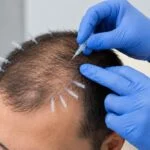
A doctor can tell you which kind of hair fall you have, so you don’t spend six months on the wrong remedy. For thinning hair, PRGF hair treatment uses a prepared part of your own blood to feed weak roots, usually over 3 to 4 sessions a month apart. We also offer PRP hair treatment and exosome hair treatment, with PRP available in Karachi, Lahore and Islamabad. Consultations are free, and you can compare all our options on the hair fall treatment page.
Medically reviewed by Dr Sadaf Saleem, Dermatologist, FCPS (Dermatology), PM&DC 62494-P; Dr Junaid Rabbani, Dermatologist, PM&DC 44510-S; and Dr Shegref Mushtaq, Dermatologist, FCPS (Dermatology), PM&DC 19827-N
- NHS. Hair loss. Reviewed January 2024.
- DermNet. Telogen effluvium.
- Panahi Y, et al. Rosemary oil vs minoxidil 2% for the treatment of androgenetic alopecia: a randomized comparative trial. Skinmed, 2015; 13(1): 15–21.
- Cleveland Clinic. Rosemary oil for your hair.
- Sharquie KE, Al-Obaidi HK. Onion juice, a new topical treatment for alopecia areata. Journal of Dermatology, 2002.
- American Academy of Dermatology. Hair loss: tips for managing.
- NHS. Complementary and alternative medicine.
Treatments in this article
Sessions, downtime and results for each, on its own page.
 PRGF Hair TreatmentAppointment: About 30 minutes; Fusion 35 · Downtime: Tender, red scalp for a day
 PRP Hair TreatmentAppointment: 45–60 minutes, with blood test · Downtime: Tender scalp for 1–2 days
 Exosome Hair TreatmentAppointment: About an hour, with PRGF · Downtime: Red, tender scalp for 1–2 days
Related articles



Ready when you are
Book your free consultation
A doctor checks your skin, hair or body first. No obligation.











 Meet our 46 doctors
We usually reply within 15 minutes.