Exfoliation: How to Exfoliate Your Face Safely, and How Often
· Edited by Shahid Hussain
The apricot scrub has sat on your bathroom shelf for years. Before every wedding you rub hard, and your face comes out red and stinging. Is that what exfoliation should feel like?
Thinking about HydraFacial? Ask us on WhatsApp. A doctor gives you an honest answer at a free check-up.
No. Exfoliation means removing dead skin cells from the surface of your skin, and for most faces once or twice a week is enough. Done gently, it can make skin look brighter and feel smoother. Done hard, it can leave redness and dark marks.1,2 Parlours often sell it as skin polishing.
What is exfoliation?
Your body sheds dead skin all the time. With age, that slows down, and old cells sit on the surface for longer.2 Skin can then look dull and feel rough.
Exfoliation clears those cells away. It is not for everyone, though. Dermatologists warn that it can do more harm than good if it is not done properly.1
What are the types of exfoliation?
There are two main types:1,2
- Physical exfoliation: a scrub, brush, sponge or washcloth rubs the dead cells off. Doctors also call it mechanical exfoliation.
- Chemical exfoliation: a mild acid dissolves the dead cells. Glycolic, lactic and salicylic acid are common ones.
Some exfoliation is done in a clinic. Chemical peels, microdermabrasion and dermaplaning are examples.2
What are the benefits of exfoliation?
Exfoliation can:2
- brighten dull skin;
- smooth rough skin;
- unclog pores;
- help your moisturiser soak in;
- even out skin colour a little.
It works on the surface only. It will not change your natural skin colour or lift loose skin.
How to exfoliate your face, step by step
- Wash first. Use lukewarm water, and check for cuts or sore patches.2
- Be gentle. Use small circles and light pressure for about 30 seconds. With an acid product, a thin layer is enough.1,2
- Rinse with lukewarm water. Hot water can irritate the skin. Some acid products stay on, so follow the label.1,2
- Moisturise straight away. Exfoliating dries the skin.1
- Wear sunscreen every day. Do this even in the weeks you exfoliate.2
How often should you exfoliate?
For the face, once or twice a week is a good guide. The body can take two or three times a week.2 The stronger the method, the less often you need it.1
Oily skin may cope with a little more. Dry or sensitive skin needs less.2 There is no prize for doing more.
Which exfoliation suits your skin type?
- Dry, sensitive or acne-prone skin: a soft washcloth and a mild acid product. Scrubs may irritate this skin.1
- Oily, thicker skin: a stronger acid product or a scrub can suit it.1
- Brown skin that marks easily: avoid strong scrubs and strong acids.1
That last point matters for most of us in Pakistan. Does a pimple or a mosquito bite leave a dark mark on you? Then harsh exfoliation can leave dark marks too.1 If you already have dark spots on face, go gently and see a doctor.
Are you exfoliating too much?
Red, sore or cracked skin means you have gone too far.2 Stop and let it heal. A few rules keep you safe:
- Never exfoliate sunburnt skin, or skin with open cuts.1
- Take care if you use a retinol or benzoyl peroxide cream. Exfoliating on top can dry the skin or cause breakouts.1
- Keep body scrubs off your face. Facial skin is thinner.2
- Use one exfoliant at a time, and let the skin rest in between.2
- Test a new acid product on your arm first.2
Exfoliation at a clinic: what are the options?
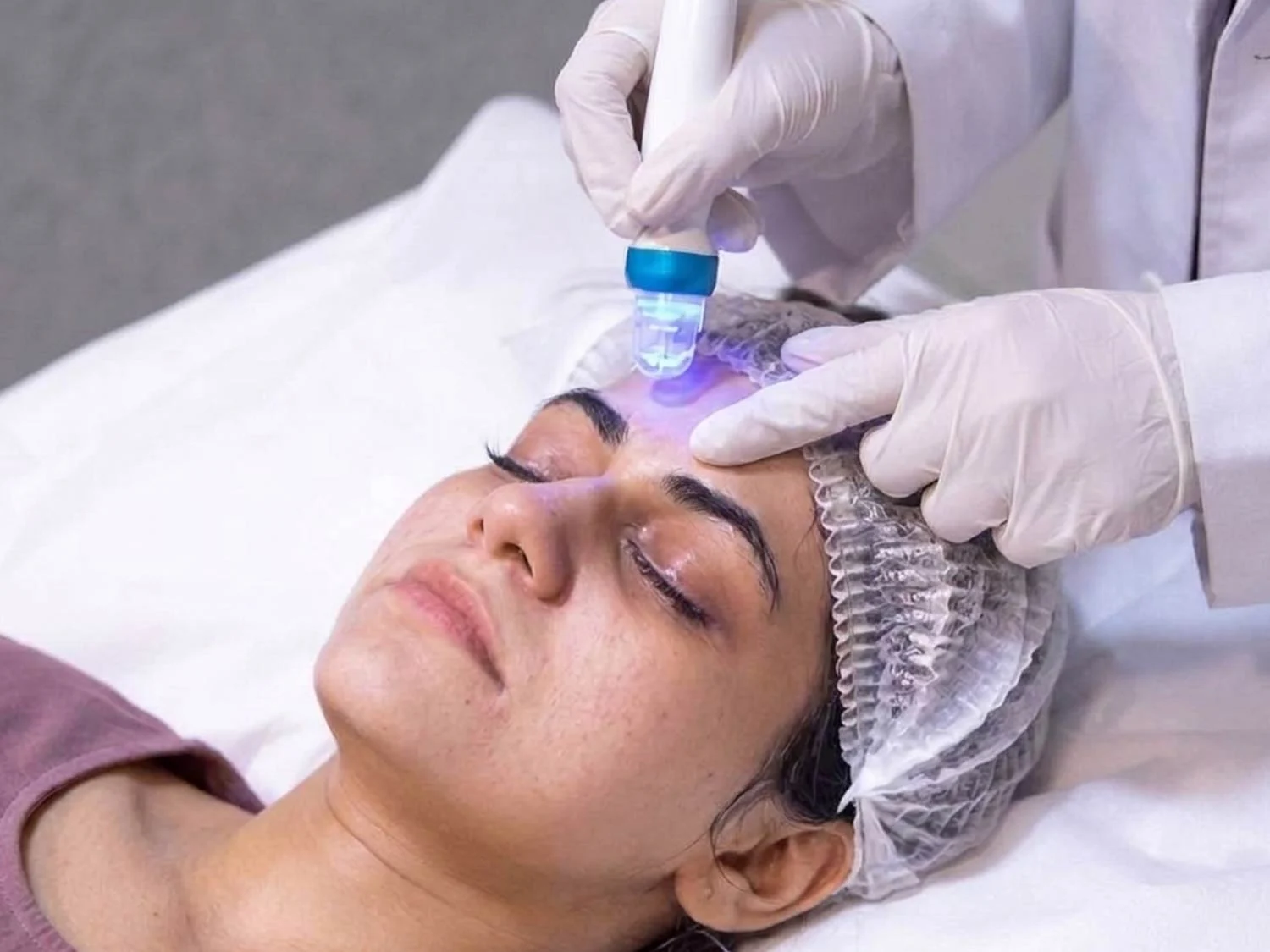
Stronger exfoliation belongs in a clinic, where a doctor checks your skin first. At Cutera Aesthetics we do not offer a service sold as skin polishing. For the same goal, our doctors use two treatments:
- HydraFacial: water and gentle suction lift dead cells and clear the pores, with no downtime. See the nine HydraFacial benefits.
- Chemical peel: a gentle acid loosens dull surface cells. Skin may flake lightly for a few days.
Your doctor tells you honestly which one fits your skin.
Questions people ask
Is it good to exfoliate every day?
For most faces, no. Once or twice a week is enough. Too much can leave skin red, sore or cracked.2
Scrub or chemical exfoliant: which is better?
It depends on your skin. Scrubs can irritate dry, sensitive or acne-prone skin, so a mild acid suits it better. Oily, thicker skin can use either.1
Should I exfoliate in the morning or at night?
Either works.2 If you do it in the morning, put on sunscreen afterwards.
Can I exfoliate if I have pimples?
Yes, but gently. For acne-prone skin, dermatologists suggest a washcloth and a mild acid product. A rough scrub may irritate it.1
Does exfoliation remove a tan?
It can make skin look brighter and a little more even.2 It does not change your natural skin colour.
What is the difference between exfoliation and skin polishing?
Skin polishing is one kind of exfoliation. In a clinic, the name usually means microdermabrasion. In a parlour, it is often a scrub or a kit.
Talk it through first
Consultations are free at all 12 of our clinics in 7 cities. A doctor looks at your skin and tells you honestly what it needs. Find a skin specialist in Islamabad, or message us on WhatsApp and we reply.
Medically reviewed by Dr Sadaf Saleem, Dermatologist, FCPS (Dermatology), PM&DC 62494-P; Dr Junaid Rabbani, Dermatologist, PM&DC 44510-S; and Dr Shegref Mushtaq, Dermatologist, FCPS (Dermatology), PM&DC 19827-N
- American Academy of Dermatology. How to safely exfoliate at home. 2026.
- Cleveland Clinic. How to exfoliate the right way.
Treatments in this article
Sessions, downtime and results for each, on its own page.



Related articles


Ready when you are
Book your free consultation
A doctor checks your skin, hair or body first. No obligation.











 Meet our 49 doctors
We usually reply within 15 minutes.