UltraShape vs Liposuction: Which Fat Treatment Suits You?
· Edited by Shahid Hussain
The scale says you’re at a healthy weight, but your waistband still pinches over a soft layer on your tummy.
Thinking about UltraShape? Ask us on WhatsApp. A doctor gives you an honest answer at a free check-up.
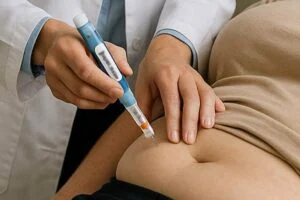
Liposuction is surgery that removes more fat in one operation, with weeks of recovery. UltraShape is a non-surgical course of focused ultrasound for a soft layer of fat, with no time off and a smaller change: about 2.4 cm off the waist in its main studies. How much fat you can pinch often decides it.1,2
How does each one remove fat?
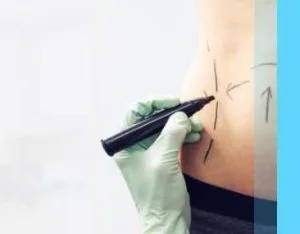
Liposuction is usually done under general anaesthetic, and most people stay in hospital overnight. The surgeon loosens the fat and suctions it out through small cuts.1
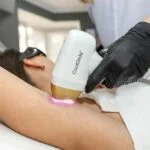
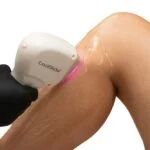
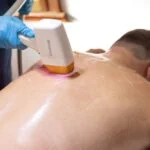
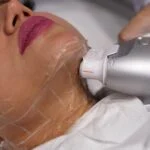
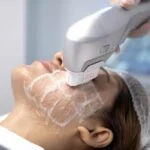
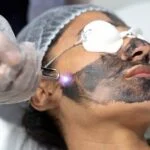
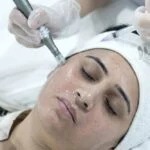
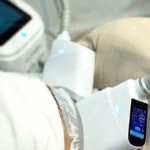
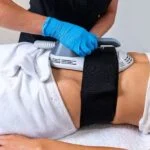
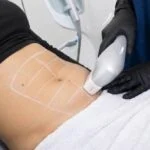
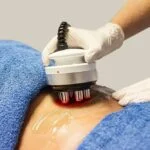
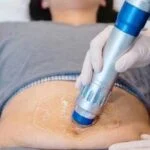
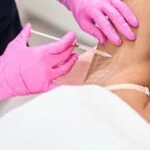
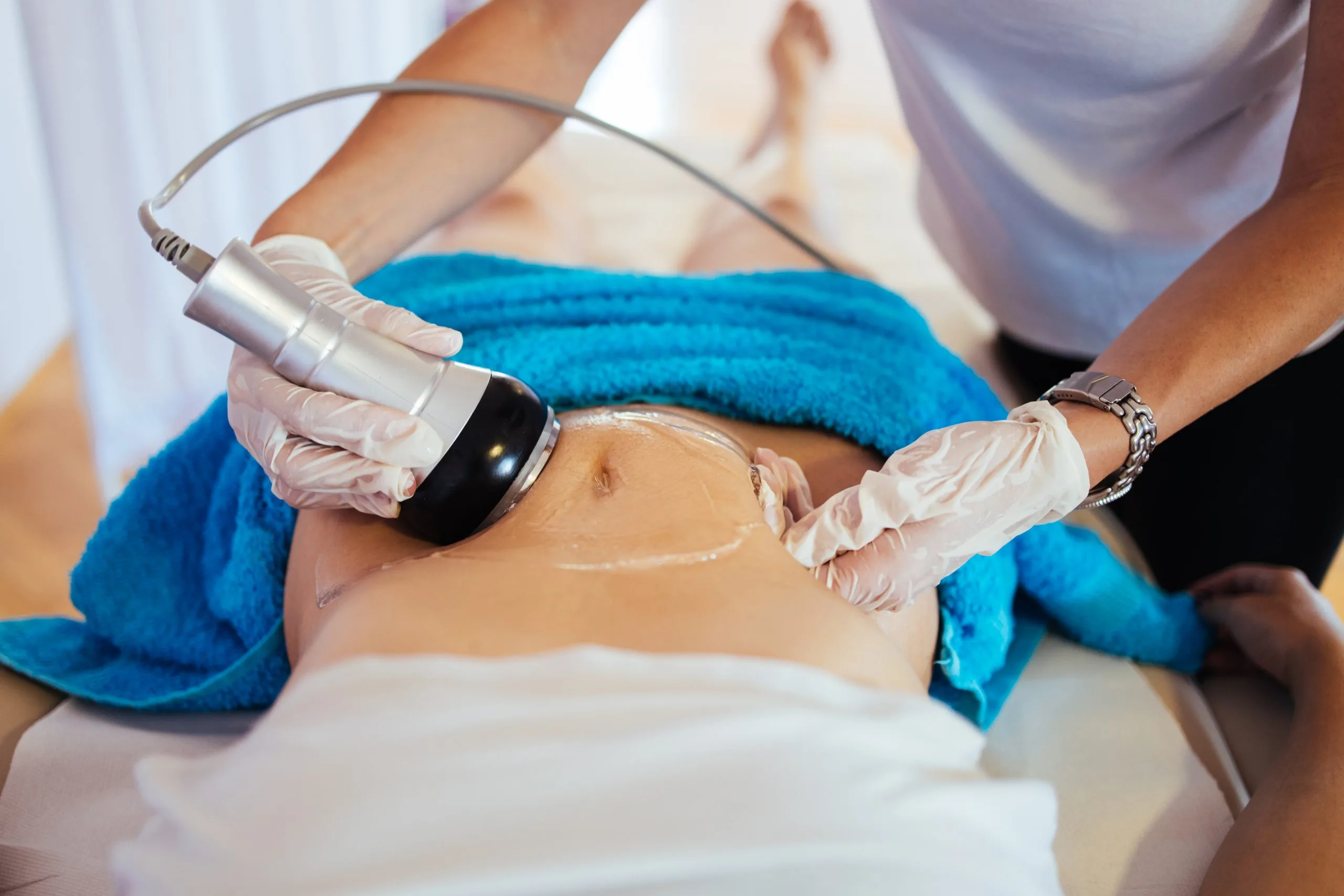
UltraShape has no cuts, needles or numbing. A transducer glides over gel on your skin, and pulses of focused ultrasound break apart fat cells at a set depth, leaving blood vessels, nerves and muscle untouched.2 Your body clears the broken cells over the following weeks. A session takes 30 to 90 minutes depending on the area.
How much fat comes off?
Liposuction can take much more. As one research group put it, non-invasive fat reduction won’t replace liposuction, because large volumes of fat can’t easily be removed this way.3
UltraShape’s change is smaller, and you can measure it:
- In the two studies in its US FDA clearance record, 102 people had three sessions two weeks apart. At the final visit the waist measured an average of 2.37 cm smaller, and weight had changed by less than 1%.2
- In an earlier controlled trial, 137 treated people lost about 2 cm from the area and about 2.9 mm of fat thickness after one session, and this held at 12 weeks.4
- In a small study of 10 women, ultrasound scans showed the fat layer 13% to 16% thinner up to 12 weeks after a course of three.5
Our course is six sessions, so those studies measured less treatment than you would have.
Results in Asian patients are mixed. One study of 53 patients found no significant change from a focused ultrasound device, and its authors put this down to smaller body figures.6 A later study of 17 patients, with a newer device that added radiofrequency, found significant improvement.7 This is one more reason your doctor checks that you have enough fat to treat before you start.
What is recovery like?
- Liposuction: expect bruising and swelling that can last up to 6 months, and a support corset or bandages worn constantly for several weeks. Gentle exercise usually starts at around 3 to 4 weeks, and hard exercise waits for 10 to 12 weeks.1
- UltraShape: you can go back to work or the gym the same day. In its studies, side effects were mild to moderate and settled within hours or days, with no serious device-related problems.2 Blood fats and liver tests were unchanged in the earlier trial.4
What are the risks?
Liposuction carries the risks of any operation, including infection, heavy bleeding and a reaction to the anaesthetic. It can also leave a lumpy or uneven result, and other possible complications include blood clots or fluid in the lungs.1
UltraShape avoids those surgical risks. Mild redness or tingling usually fades within hours. It isn’t suitable during pregnancy, with a hernia, recent surgery or a metal implant in the area, or on broken or infected skin.
Who suits which?
Neither treats obesity, and both suit people at a normal or near-normal weight.8
- UltraShape may suit you if you have a soft, pinchable layer on the tummy (the area its studies measured), you’re near your ideal weight, and you’d take a modest change over surgery and time off.
- Liposuction may suit you if you have larger deposits, you want the bigger change in one operation, and you’re fit for surgery and recovery.
- Neither may be right if your main concern is loose skin. Liposuction works better on firm, elastic skin, and skin that is soft and thin from weight loss or age may need separate surgery to tighten it.8 UltraShape doesn’t tighten skin either.
UltraShape isn’t used on the face. For fat under the chin, ask about other options.
Do the results last?
Both last if your weight stays steady. Results of liposuction are generally long-lasting if you keep a healthy weight.1 With UltraShape, fat cells that have been cleared don’t come back, though the ones left behind can still grow if you gain weight.
What other non-surgical options are there?
Many people who want to avoid surgery ask about these too:
- CoolSculpting freezes fat, and studies report up to 25% less fat at the site after one treatment. The people it suits are within their ideal weight, with noticeable bulges.9 Rarely, treated fat grows firmer and larger months later.9
- EMSculpt works the muscle. In 21 people scanned about a year after a course, fat was 14.6% thinner and muscle 19.1% thicker than at the start.10
What should I do next?
Our UltraShape page covers areas, sessions and aftercare. Consultations for this are free at all 12 of our clinics, you can ask for a female doctor, and your doctor will measure the area first. Compare all our non-surgical body contouring options, or talk to a doctor in Lahore.
Medically reviewed by Dr Sadaf Saleem, Dermatologist, FCPS (Dermatology), PM&DC 62494-P; Dr Junaid Rabbani, Dermatologist, PM&DC 44510-S; and Dr Shegref Mushtaq, Dermatologist, FCPS (Dermatology), PM&DC 19827-N
- NHS. Liposuction.
- US Food and Drug Administration. 510(k) summary K141708: UltraShape System. 2014.
- Duncan DI, et al. A prospective study analyzing the application of radiofrequency energy and high-voltage, ultrashort pulse duration electrical fields on the quantitative reduction of adipose tissue. J Cosmet Laser Ther, 2016.
- Teitelbaum SA, et al. Noninvasive body contouring by focused ultrasound: safety and efficacy of the Contour I device. Plast Reconstr Surg, 2007.
- Weinstein Velez M, et al. Nonthermal pulsed ultrasound treatment for the reduction in abdominal fat: a pilot study. J Clin Aesthet Dermatol, 2018.
- Shek S, et al. The use of focused ultrasound for non-invasive body contouring in Asians. Lasers Surg Med, 2009.
- Shek SY, et al. The efficacy of a combination non-thermal focused ultrasound and radiofrequency device for noninvasive body contouring in Asians. Lasers Surg Med, 2016.
- American Society of Plastic Surgeons. Liposuction.
- Krueger N, et al. Cryolipolysis for noninvasive body contouring: clinical efficacy and patient satisfaction. Clin Cosmet Investig Dermatol, 2014.
- Kinney BM, Kent DE. MRI and CT assessment of abdominal tissue composition in patients after high-intensity focused electromagnetic therapy treatments: one-year follow-up. Aesthet Surg J, 2020.
Treatments in this article
Sessions, downtime and results for each, on its own page.
Related articles


Ready when you are
Book your free consultation
A doctor checks your skin, hair or body first. No obligation.











 Meet our 50 doctors
We usually reply within 15 minutes.