Salicylic Acid for Pimples: How to Use It at Home

Choose a product with 0.5% to 2% salicylic acid, start with a cleanser or a small area of skin, and use it less often at first. Allow 6 to 8 weeks before judging it. It suits blackheads, whiteheads and mild pimples, while deep or painful pimples need a doctor.1,2
What does salicylic acid do to a pimple?
It dissolves in oil, so it can collect inside the oil glands and hair follicles where pimples start, and it calms inflammation.3 The American Academy of Dermatology says it opens clogged pores and works on whiteheads and pimples.2
In a four-week crossover trial of 30 people, only those using a 2% salicylic acid cleanser had a significant fall in blackheads and whiteheads, compared with a 10% benzoyl peroxide wash.4 In a 12-week trial, 0.5% salicylic acid pads reduced red pimples and blackheads more than the same pads without the acid.5
One limit is worth knowing. The 2024 American acne guideline gives salicylic acid a conditional recommendation, and gives benzoyl peroxide and retinoids a strong one.6 So it’s a sensible first step for clogged pores, and stubborn pimples often need more.
What strength should I buy?
Look for 0.5% to 2% on the label, the over-the-counter acne range in the US.1 A review of these products warns that very low strengths may do little.5 If the label doesn’t state a percentage, you can’t compare it.
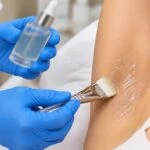
Clinic peels are far stronger, at 20% to 30%.3 Leave those to a doctor, because salicylic acid can irritate or burn healthy skin.7
Salicylic acid cleanser or leave-on?
A cleanser stays on your skin briefly and then rinses away. A leave-on gel, lotion or serum stays on for hours. We found no trial comparing the two directly, so this is practical advice:
- Choose a salicylic acid cleanser if you’re new to it, have sensitive skin, or mostly get blackheads on oily skin.
- Choose a leave-on for the areas that keep breaking out once a cleanser no longer does enough.
- Don’t start both at once. Add one product, see how your skin reacts, then decide on the next.
How do I start without irritating my skin?
- Test it. Put a little on one or two small areas for 3 days.8
- Build up slowly. Use it less often at first, then more often if your skin is comfortable.8
- Cut back if your skin turns dry or irritated.8
- Keep it off broken, red, swollen or infected skin, and away from your eyes, nose and mouth.8
- Wash gently up to twice a day and after sweating, and wear SPF 30 or higher outdoors.9
- Leave pimples alone. Picking makes them take longer to clear.9
- Stay with one routine. Switching treatments too often can irritate skin and cause breakouts.9
What can I mix with salicylic acid?
Unless your doctor says otherwise, keep benzoyl peroxide, tretinoin, sulfur and resorcinol off the same skin, along with alcohol-based products and harsh scrubs.7,8 Dermatologists do combine acne medicines, because they work on different causes.2 They also choose the strengths and timing, so ask before adding salicylic acid to a prescribed cream.
We found no study on using it with vitamin C. If you use both, keep them to different times of day.
Check with a doctor or pharmacist before using aspirin or muscle rubs containing methyl salicylate alongside it.8
Who should be careful?
- If you’re pregnant, planning a pregnancy or breastfeeding, talk to your doctor first, because it can be absorbed through the skin.7
- If you’re allergic to aspirin, ask before using it. Our peel isn’t given to people with this allergy.
- Tell your doctor if you have diabetes, or blood vessel, kidney or liver disease.8
- Children and teenagers with chickenpox or flu shouldn’t use it without a doctor’s advice.8
- Avoid using it over large areas of skin. Poisoning is rare, and the risk is higher over a large area or damaged skin.5
Serious allergic reactions are rare. The US FDA counted 131 serious cases linked to over-the-counter benzoyl peroxide or salicylic acid acne products between 1969 and 2013.10 Stop and get emergency care if you have throat tightness, trouble breathing, faintness, or swelling of your eyes, face, lips or tongue. Stop the product if you get hives or itching.10
When should I see a doctor about pimples?
See a doctor if you’ve had no improvement after 6 to 8 weeks, or if your pimples are deep and painful, because those can need prescription treatment.2 Don’t wait if they’re starting to leave marks or scars.
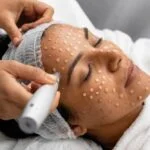
If home care has stopped working, a salicylic acid peel is the next step many people ask about. That page covers who it suits, sessions and prices. Aesthetic consultations are free at all 12 of our clinics, and you can ask for a female doctor. A dermatologist consultation has a fee. If pimples keep coming back, a skin specialist in Islamabad or a skin specialist in Rawalpindi can check whether a peel suits you.
Medically reviewed by Dr Sadaf Saleem, Dermatologist, FCPS (Dermatology), PM&DC 62494-P; Dr Junaid Rabbani, Dermatologist, PM&DC 44510-S; and Dr Shegref Mushtaq, Dermatologist, FCPS (Dermatology), PM&DC 19827-N
- Code of Federal Regulations. 21 CFR 333.310: Acne active ingredients.
- American Academy of Dermatology. Acne: Diagnosis and treatment.
- Arif T. Salicylic acid as a peeling agent: a comprehensive review. Clin Cosmet Investig Dermatol, 2015.
- Shalita AR. Comparison of a salicylic acid cleanser and a benzoyl peroxide wash in the treatment of acne vulgaris. Clin Ther, 1989.
- Decker A, Graber EM. Over-the-counter acne treatments: a review. J Clin Aesthet Dermatol, 2012.
- Reynolds RV, et al. Guidelines of care for the management of acne vulgaris. J Am Acad Dermatol, 2024.
- DermNet. Salicylic acid.
- MedlinePlus. Salicylic acid topical.
- American Academy of Dermatology. Acne: Tips for managing.
- US Food and Drug Administration. Safety announcement on over-the-counter topical acne products (in Spanish), 2014.
Treatments in this article
Sessions, downtime and results for each, on its own page.

Related articles
Ready when you are
Book your free consultation
A doctor checks your skin, hair or body first. No obligation.










 Meet our 46 doctors
We usually reply within 15 minutes.