Thread Lift vs Facelift: Which Suits You?

A facelift is surgery that removes loose skin, with a bigger result that usually lasts around 7 to 10 years and 2 to 4 weeks off work. A thread lift has no cuts, a smaller lift and a few days of recovery, and it fades as the threads dissolve. Threads suit early to moderate sagging.1,2
How does each one lift the face?
A facelift takes about 2 to 3 hours, usually under general anaesthetic, and most people stay in hospital overnight. The surgeon makes incisions, removes surplus skin, pulls the rest back and up, and stitches it in place.1
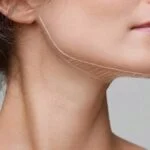
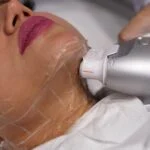
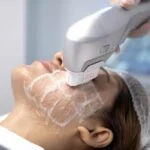
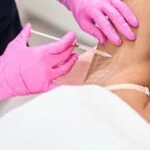
A thread lift takes 20 to 90 minutes under local anaesthetic. Your doctor slides fine, dissolving threads under the skin through tiny entry points. Barbed cog threads grip and raise loose tissue, and as the threads dissolve they spark new collagen around them.
The American Society of Plastic Surgeons is clear that only surgery can produce the results of a facelift, and also that minimally invasive treatments may delay the point at which surgery makes sense.3 So think of a thread lift as a smaller step with its own uses.
What is recovery like?
- Facelift: plan 2 to 4 weeks off work. Bruising shows for at least 2 weeks, and you may not see the final result for 6 to 9 months.1
- Thread lift: most people are back at desk work within a few days. Swelling, bruising and tenderness are common for 1 to 2 weeks. Don’t rub your face for 2 weeks, or open your mouth wide, and avoid hard exercise for a week.
For a wedding or big event, have threads at least four to six weeks ahead, so swelling and any small dimples have settled.
How long do results last?
A facelift lasts longer. Results usually last around 7 to 10 years, while you carry on ageing.2 In one study of 50 people photographed an average of 5½ years after surgery, 76% still looked younger than before it.4
A thread lift shows straight away. A 2025 review of 12 studies and 818 patients confirmed that improvement is immediate, and found complications were mild.5 It also fades. In a study of 27 Thai patients, 51.9% rated the lift excellent at one week, and the threads began to reabsorb from about 6 months.6 Our page gives about six to eight months for PDO threads and a year to a year and a half for PCL threads, and collagen formed around them can keep skin firmer for a while longer.
The honest limit: long-term data are lacking. That review followed patients for 2 years at most, and an earlier one found the lifting effect had very limited durability in most studies.5,7 Think of threads as a refresh you can repeat.
What are the risks of each?
Thread lift. A review of 26 studies gave these pooled rates:8
- Swelling: 35%
- Small dimples in the skin: 10%
- Numbness or tingling: 6%
- Threads that can be seen or felt: 4%
- Infection: 2%
- A thread poking through the skin: 2%
Dissolving threads, the type we use, caused less tingling and fewer threads poking through than non-dissolving ones. Age matters too: dimpling was 16% in people over 50 against 5.6% in younger people, and infection 5.9% against 0.7%.8 Serious problems such as nerve or gland injury are uncommon, and most side effects settle on their own or with treatment.9
Facelift. Like any surgery, it has risks of bleeding under the skin, infection and scarring. Nerve injury can cause loss of feeling or movement in the face.1,2
Which suits you?
A thread lift may suit you if:
- Your cheeks, jowls, jawline or brows have started to sag, and the change is early to moderate.
- You can’t have surgery, or can’t take weeks away from work.
- You’re happy with a smaller result that you can repeat.
A facelift may suit you better if:
- Your jowls are heavy or your skin is very loose.
- You want the largest, longest-lasting change.
- You’re fit for surgery, and you accept the recovery. Cleveland Clinic describes typical candidates as being in their 40s to 60s, with some skin elasticity left.2
Neither one fixes fine lines, sun damage or uneven colour.2 Those need a skin treatment. A thread lift also isn’t suitable during pregnancy or breastfeeding, with an infection or active acne in the area, or with a bleeding disorder.
What should I do next?
Ask a doctor to look at how loose your skin is, and to tell you plainly if you’d do better with a surgeon. Our thread lift page covers thread types, steps and aftercare. Consultations for this are free at all 12 of our clinics, and you can ask for a female doctor. See how we do a thread lift in Islamabad, or compare other face sculpting treatments.
Medically reviewed by Dr Sadaf Saleem, Dermatologist, FCPS (Dermatology), PM&DC 62494-P; Dr Junaid Rabbani, Dermatologist, PM&DC 44510-S; and Dr Shegref Mushtaq, Dermatologist, FCPS (Dermatology), PM&DC 19827-N
- NHS. Facelift.
- Cleveland Clinic. Facelift (rhytidectomy).
- American Society of Plastic Surgeons. Facelift.
- American Society of Plastic Surgeons. Journal report finds patients still look younger five years after facelift surgery. 2012.
- Riopelle AM, et al. Update on absorbable facial thread lifts. Dermatol Surg, 2025.
- Wanitphakdeedecha R, et al. Absorbable barbed threads for lower facial soft-tissue repositioning in Asians. Dermatol Ther, 2021.
- Gülbitti HA, et al. Thread-lift sutures: still in the lift? A systematic review of the literature. Plast Reconstr Surg, 2018.
- Niu Z, et al. A meta-analysis and systematic review of the incidences of complications following facial thread-lifting. Aesthetic Plast Surg, 2021.
- Pham CT, et al. Safety profile of thread lifts on the face and neck: an evidence-based systematic review. Dermatol Surg, 2021.
Treatments in this article
Sessions, downtime and results for each, on its own page.

Related articles



Ready when you are
Book your free consultation
A doctor checks your skin, hair or body first. No obligation.











 Meet our 46 doctors
We usually reply within 15 minutes.