Sun Damaged Skin: 5 Treatments That Help

Five treatments that help sun damaged skin are daily sunscreen, a retinoid, vitamin C, chemical peels and pico laser. Creams work slowly, over months, while clinic treatments target spots and uneven tone. In a year-long study, daily SPF 30 improved skin texture and pigmentation by 40% to 52%.1
What does sun damage look like?
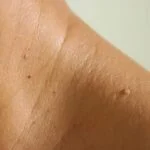
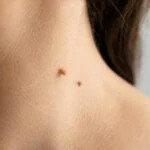
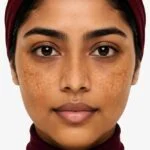
The common signs are flat brown sun spots, which are common in Asian skin and often appear on the face.2 Fine lines, rough texture and a dull, uneven tone are also typical. Sunlight can also darken melasma, the patchy brown marks on the face.3
Which marks should a doctor check first?
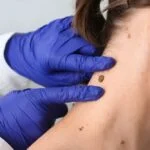
A rough, scaly patch that feels like sandpaper may be an actinic keratosis. These are caused by sun damage, and there is a small chance they could become skin cancer.4 Also get a spot checked if it has an uneven edge, varied colours, or is changing in size, shape or colour.5 Cosmetic treatment comes after that check.
Which five treatments help?
1. Daily sunscreen
This protects your skin and gives it a chance to recover. In a trial of 903 adults under 55, the daily sunscreen group showed no detectable skin ageing over 4.5 years, and 24% less ageing than those using it when they chose.6 In the year-long study above, all 32 adults used the sunscreen, so there was no comparison group, and some authors worked for a sunscreen maker.1
Use broad-spectrum SPF 30 or higher: at least a teaspoon on the face, reapplied about every two hours outdoors. Tinted formulas with iron oxide may also help against visible light, which can worsen dark marks on darker skin.7
2. A retinoid
Used for more than six months, tretinoin can reduce freckling, sun spots and fine wrinkling.8 It is the most studied retinoid for sun-aged skin, and it can burn, peel and irritate. Retinol is much gentler.9 Retinoids can make skin more sun-sensitive, and some must not be used in pregnancy, so talk to your doctor first.8
3. Vitamin C
This antioxidant is used on the skin to treat and prevent sun ageing and to lighten dark marks. It is also unstable and hard to deliver into the skin.10 The evidence is thinner than for sunscreen or retinoids, so treat it as an addition to them.
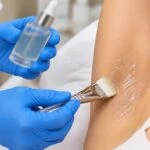
4. Chemical peels
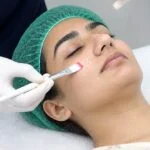
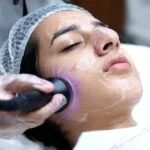
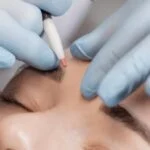
Dermatologists use peels for age spots, freckles, blotchy tone, fine lines and sun-damaged skin. A course of 3 to 5 light peels is typical, and skin can be red for 1 to 7 days, with flaking for 3 to 7 days.11,12 Our glycolic acid peel is a common choice. Glycolic acid has improved rough texture and fine wrinkling in mild sun damage, though it doesn’t affect deep wrinkles or deep pigment.13
On brown skin, the choice of peel and the person applying it matter, because darker skin can develop lasting pigment problems without the right expertise.12 Have peels done by a trained doctor, because some peels sold for home use have caused serious injuries.11
5. Pico laser
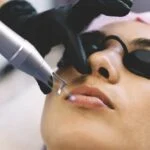
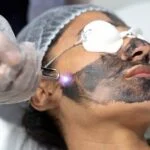
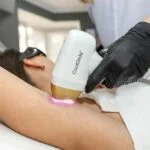
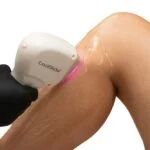
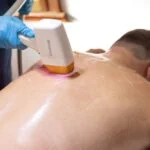
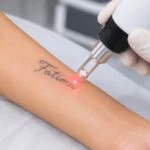
Pico laser breaks pigment into tiny particles your body clears away. In a split-face trial of 20 women with skin types III to V, one picosecond session cleared sun spots better at 12 weeks than a Q-switched laser (a mean score of 2.95 against 1.8).14 It is a small study, and it compared two lasers, so it can’t tell you how pico compares with peels or creams. Most plans use 3 to 5 sessions, about 4 weeks apart, and temporary darker or lighter patches can happen, more often on darker skin. Sun protection afterwards helps keep spots from coming back.2
Which should I start with?
Sunscreen first, whatever else you choose, because new sun will undo the rest. Then match the treatment to what you see:
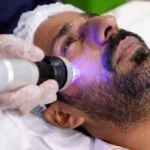
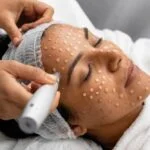
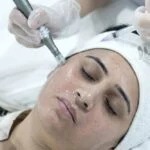
- Early dullness and rough texture: a retinoid at home, with peels or a Diamond Glow facial in clinic.
- Defined sun spots: pico laser.
- Melasma: a gentler, longer plan with daily sunscreen, because melasma can be stubborn and the sun brings it back.3
Many people begin clinic treatment after summer, when it is easier to stay out of strong sun. Our pigmentation treatments page compares all the options.
Consultations for aesthetic treatments are free at all 12 of our clinics, and you can ask for a female doctor. A dermatologist consultation has a fee. For sun damage that doesn’t fade, see a dermatologist in Islamabad or a skin specialist in Hyderabad.
Medically reviewed by Dr Sadaf Saleem, Dermatologist, FCPS (Dermatology), PM&DC 62494-P; Dr Junaid Rabbani, Dermatologist, PM&DC 44510-S; and Dr Shegref Mushtaq, Dermatologist, FCPS (Dermatology), PM&DC 19827-N
- Randhawa M, et al. Daily use of a facial broad spectrum sunscreen over one-year significantly improves clinical evaluation of photoaging. Dermatol Surg, 2016.
- DermNet. Solar lentigo.
- American Academy of Dermatology. Melasma: diagnosis and treatment.
- NHS. Actinic keratoses (solar keratoses).
- American Academy of Dermatology. What to look for: ABCDEs of melanoma.
- Hughes MC, et al. Sunscreen and prevention of skin aging: a randomized trial. Ann Intern Med, 2013.
- American Academy of Dermatology. Sunscreen FAQs.
- DermNet. Topical retinoids.
- Mukherjee S, et al. Retinoids in the treatment of skin aging: an overview of clinical efficacy and safety. Clin Interv Aging, 2006.
- Telang PS. Vitamin C in dermatology. Indian Dermatol Online J, 2013.
- American Academy of Dermatology. Chemical peels: Overview.
- American Academy of Dermatology. Chemical peels: FAQs.
- Sharad J. Glycolic acid peel therapy: a current review. Clin Cosmet Investig Dermatol, 2013.
- Kim JY, et al. A split-face, single-blinded, randomized controlled comparison of 532 nm picosecond Nd:YAG laser versus 532 nm Q-switched Nd:YAG laser in the treatment of solar lentigines. Ann Dermatol, 2020.
Treatments in this article
Sessions, downtime and results for each, on its own page.
Related articles

Ready when you are
Book your free consultation
A doctor checks your skin, hair or body first. No obligation.











 Meet our 46 doctors
We usually reply within 15 minutes.