Laser Hair Removal Mistakes: 5 That Can Spoil Your Results

Five mistakes can spoil laser hair removal: waxing or plucking between sessions, having treatment on tanned skin, stopping before the course ends, expecting every hair to go, and not checking the machine or the operator. Avoid them and you lower your risk of burns and marks, and you get more from every session.1,2,3
Mistake 1: Waxing or plucking, or skipping the shave
The laser needs a hair root to aim at. Waxing and plucking pull that root out, so stop them 6 weeks before treatment.1 Shaving is fine, because it leaves the root in place. Shave long enough before your appointment for a slight stubble to show, because long hair soaks up too much of the laser’s energy before it reaches the root.1 We ask patients to shave the day before, and to shave only between sessions.
Mistake 2: Having laser on tanned skin
A recent tan raises your risk of burns, and so does darker skin, because more melanin in the top layer of skin takes up laser energy.2 In summer, this is the mistake to watch for. Doctors may ask you to use sunscreen for 4 to 6 weeks before treatment, especially on exposed areas, and sun protection is a must afterwards.1 If you’ve caught the sun, tell your doctor. Moving a session is easier than treating a mark.
Brown skin can still have good results with the right setup. In a study of 150 people with brown to dark skin treated with a long-wavelength laser, 86% had no complications, and all those that happened were temporary, mainly dark marks.4
Mistake 3: Stopping after two or three sessions
Laser works only on hairs in their growing phase, and at any visit many hairs are resting. So you need repeat sessions, usually at least 4 to 6, spaced 4 to 6 weeks apart.1 Stopping early leaves the hairs that were resting untouched, and it may look like the treatment failed.
Some areas take longer. In that same study of brown and dark skin, mostly on the face, people had an average of 8.9 sessions.4 Facial and hormone-driven hair, including hair linked to PCOS, can need more sessions and top-ups.
Mistake 4: Expecting every hair to go
Laser reduces hair, and the amount varies. A review of five randomized trials with 223 patients found long-term reduction ranged from 30% to 74% with Nd:YAG lasers, 35% to 84% with alexandrite and 33% to 69% with diode, and it was lowest on the face.3 In the brown-skin study, the mean reduction was 54.3%, and in 79.3% of people the hair that came back was slower and finer.4
Most people stay hair free for months or even years, and some need maintenance sessions.5 Some doctors suggest one every 6 to 12 months.1 The laser doesn’t work on grey, white or very light hair.
Mistake 5: Not checking the machine and the operator
When laser is done by inexperienced providers, burns, lasting colour changes and scars can occur, and darker skin needs extra care.5 Machines matter too. Pigment changes were reported in up to 19% of people with shorter-wavelength lasers, particularly on darker skin, against 2% to 3% with Nd:YAG.6 Before you book, ask:
- Is this a laser or IPL, and which wavelengths does it use?
- Does it suit my skin tone and hair?
- Who will treat me, and how much experience do they have with skin like mine?
- Will you test my skin first?
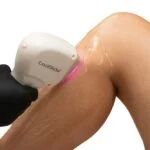
We use CoolGlide at all our clinics, and that page compares it with IPL and other lasers. Your doctor checks your skin and hair first, and test pulses are checked before the course begins.
What are the normal laser hair removal side effects?
Redness and swelling are common and usually last 1 to 3 days.5 You may also feel some burning after a session.1 Stay out of direct sun and away from tanning beds.5
Contact your clinic if you see blisters, crusting, or dark or pale patches, because these need a doctor’s care.1 Rarely, hair can grow more after laser, an effect known as paradoxical hair stimulation.2
Who shouldn’t have laser hair removal?
We don’t use it in pregnancy, over sunburn or a recent tan, or on infected skin. Please mention cold sores, keloid scars or recent isotretinoin first, so your doctor can plan your sessions safely.
What should I do next?
Our CoolGlide page covers sessions, prices and what each step involves. Consultations for this are free at all 12 of our clinics, and you can ask for a female doctor. To avoid these mistakes, see how we plan laser hair removal in Lahore and laser hair removal in Rawalpindi.
Medically reviewed by Dr Sadaf Saleem, Dermatologist, FCPS (Dermatology), PM&DC 62494-P; Dr Junaid Rabbani, Dermatologist, PM&DC 44510-S; and Dr Shegref Mushtaq, Dermatologist, FCPS (Dermatology), PM&DC 19827-N
- Vaidya T, et al. Laser hair removal. StatPearls, updated 2023.
- Nguyen L, et al. Complications of laser and energy-based procedures in dermatology. J Dtsch Dermatol Ges, 2026.
- Krasniqi A, et al. Efficacy of lasers and light sources in long-term hair reduction: a systematic review. J Cosmet Laser Ther, 2022.
- Rao K, Sankar TK. Long-pulsed Nd:YAG laser-assisted hair removal in Fitzpatrick skin types IV-VI. Lasers Med Sci, 2011.
- American Academy of Dermatology. Laser hair removal: FAQs.
- Lim SP, Lanigan SW. A review of the adverse effects of laser hair removal. Lasers Med Sci, 2006.
Treatments in this article
Sessions, downtime and results for each, on its own page.

Related articles



Ready when you are
Book your free consultation
A doctor checks your skin, hair or body first. No obligation.











 Meet our 46 doctors
We usually reply within 15 minutes.