Skin Care in Your 30s: Treatments for Skin, Scars and Body
· Edited by Sobia Mansoor

Your thirties arrive and so do the small changes: the first fine lines, a few old acne marks, and a body that doesn’t bounce back like it used to.
Thinking about Microneedling? Ask us on WhatsApp. A doctor gives you an honest answer at a free check-up.
In your 30s, start with daily sunscreen, then add a retinoid at night. In a trial of 903 Australian adults under 55, those using sunscreen every day showed no detectable increase in skin ageing over 4.5 years.1 Add clinic treatment only for a specific problem, such as acne scars, early sagging or stubborn fat.
What changes in your skin in your 30s?
Many people start to see wrinkles and fine lines in their 30s.2 Two things are at work: natural ageing, which can’t be avoided, and sun damage, which builds with every year of exposure.3 Smoking greatly speeds up ageing, and a diet high in sugar or refined carbohydrates may do the same.4
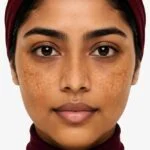
Skin colour can change too. Sunlight, pregnancy and birth control pills can all trigger melasma, the brown patches that appear on the face, so sun protection matters even more if you are having children in these years.5
What should my daily routine include?
- Morning: wash with a mild cleanser, then apply a broad-spectrum, water-resistant sunscreen of SPF 30 or higher. Your face needs at least a teaspoon, about 15 minutes before you go out.2,6
- Outdoors: reapply every two hours, and straight after sweating.6
- Night: wash off make-up and sweat, wait 20 to 30 minutes, then apply your retinoid. If it dries your skin, put a non-clogging moisturiser on first.2
- Any time: stop a product that irritates you. Otherwise give it at least 30 days before you judge it.2
Why add a retinoid? Used for more than six months, tretinoin can reduce freckling, sun spots and fine wrinkling.7 It is the most studied retinoid for sun-aged skin and also one of the most irritating, while retinol causes much less irritation.3 Retinoids can make skin more sensitive to the sun, which is one more reason to keep up your sunscreen.7
Which clinic treatments make sense in your 30s?
The one that matches what has changed in your face. As a guide:
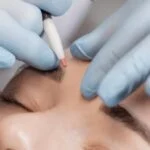
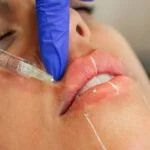
- Lines that show when you move: Botox relaxes the muscles behind forehead lines, frown lines and crow’s feet.
- Dull, dry skin: a HydraFacial for a glow that lasts a few weeks, or a skin booster such as Profhilo for longer-lasting hydration.
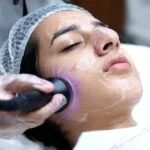
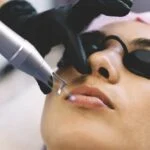
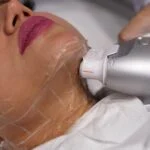
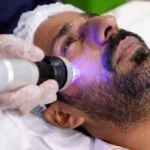
- First fine lines and slight looseness: the Deep Collagen facial uses radiofrequency, with no needles and no downtime.
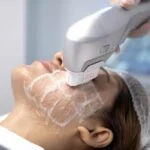
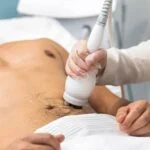
- Early sagging at the jaw and cheeks: HIFU, which builds gradually over two to three months.
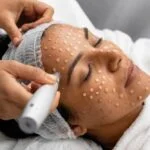
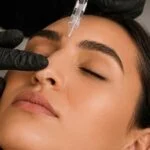
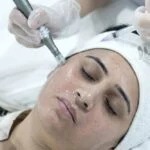
- Rough texture and open pores: microneedling, over a course of sessions.
Non-surgical treatments give more modest results than a facelift. With one ultrasound treatment, most people see modest lifting and tightening within 2 to 6 months.8 You can compare all the options on our anti-ageing treatments page.
Can old acne scars still be treated?
Yes. Dermatologists treat sunken scars with microneedling, radiofrequency, peels, platelet-rich plasma, fillers or lasers, usually once acne is under control, and they often combine them. Radiofrequency and microneedling together can leave scars less noticeable than either alone.9
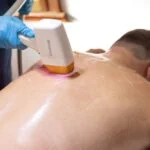
That pairing is what RF microneedling does in one treatment. In a study of 30 Asian adults with skin types III to V, 26 finished three monthly sessions, and most rated their scars 26–50% better at six months. Side effects included pain during treatment, swelling and temporary colour changes.10
What about fat that diet and exercise won’t shift?
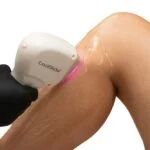
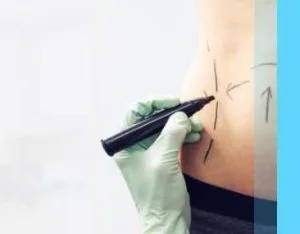
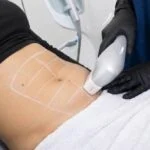
CoolSculpting, or fat freezing, suits pinchable pockets when you are near your ideal weight. It isn’t weight loss. A review of 19 papers found the fat layer shrank by an average of 14.7% to 28.5% when measured with callipers, with mild, short-term side effects.11
There is one rare risk to know about: treated fat can slowly grow firmer and larger instead of shrinking. A 2025 review put this at 0.22% of patients, about 1 in 455, and treatment often means surgery.12 Tell your doctor if you notice it.
What changes if I’m pregnant or planning to be?
Tell your doctor before you start anything. Some topical retinoids must not be used in pregnancy, and they can harm a developing baby, so effective contraception is advised while using them.7 Microneedling and RF microneedling aren’t suitable during pregnancy. A HydraFacial can usually go ahead, with the acid peel step and some boosters left out.
Where should I start?
Pick the one thing that bothers you most, and take a clear photo of it in daylight so you can judge changes fairly. Keep up the sunscreen whatever else you choose. Consultations for aesthetic treatments are free at all 12 of our clinics, and you can ask for a female doctor. A dermatologist consultation has a fee.
See our anti-ageing treatments, or ask a skin specialist in Karachi for a plan that suits your skin.
Medically reviewed by Dr Sadaf Saleem, Dermatologist, FCPS (Dermatology), PM&DC 62494-P; Dr Junaid Rabbani, Dermatologist, PM&DC 44510-S; and Dr Shegref Mushtaq, Dermatologist, FCPS (Dermatology), PM&DC 19827-N
- Hughes MC, et al. Sunscreen and prevention of skin aging: a randomized trial. Ann Intern Med, 2013.
- American Academy of Dermatology. Dermatologist-recommended skin care for your 20s.
- Mukherjee S, et al. Retinoids in the treatment of skin aging: an overview of clinical efficacy and safety. Clin Interv Aging, 2006.
- American Academy of Dermatology. 11 ways to reduce premature skin aging.
- American Academy of Dermatology. Melasma: diagnosis and treatment.
- American Academy of Dermatology. How to apply sunscreen.
- DermNet. Topical retinoids.
- American Academy of Dermatology. Many ways to firm sagging skin.
- American Academy of Dermatology. Acne scars: Diagnosis and treatment.
- Vejjabhinanta V, et al. The efficacy in treatment of facial atrophic acne scars in Asians with a fractional radiofrequency microneedle system. J Eur Acad Dermatol Venereol, 2014.
- Ingargiola MJ, et al. Cryolipolysis for fat reduction and body contouring: safety and efficacy of current treatment paradigms. Plast Reconstr Surg, 2015.
- Mah AE, et al. Incidence of paradoxical adipose hyperplasia after cryolipolysis: a systematic review and meta-analysis. Aesthet Surg J Open Forum, 2025.
Treatments in this article
Sessions, downtime and results for each, on its own page.



Related articles

Ready when you are
Book your free consultation
A doctor checks your skin, hair or body first. No obligation.











 Meet our 49 doctors
We usually reply within 15 minutes.