Is Laser Hair Removal Safe? 5 Myths Explained

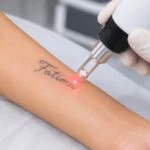
Yes, laser hair removal is safe for most people when a trained doctor matches the laser to their skin and hair. At one dermatology centre, 0.69% of 16,900 patients had a recorded complication in a year. Redness and swelling are common and short-lived. Burns and lasting colour changes are uncommon, and a tan raises the risk.1,2,3,10
Myth 1: Laser hair removal causes cancer
This worry is common. In one survey of dermatology patients, 20.6% thought laser may cause skin cancer and 26.7% thought it may cause breast cancer.4 We found no good evidence for either.
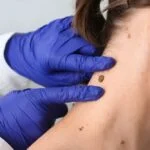
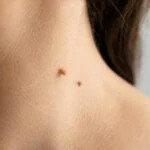
Lasers and intense pulsed light use non-ionising light, which doesn’t directly damage DNA the way UV can. A 2017 review found only a few anecdotal melanoma cases after treatment, and concluded there is no evidence of a credible cancer risk.5 That review also asks for a skin check first, so a suspicious mole isn’t treated by accident. If you’ve had skin cancer, tell your doctor, because you may need to avoid treatment.3,5
Myth 2: It isn’t safe on brown skin
This was closer to the truth with older shorter-wavelength lasers. Melanin in darker skin takes up some of the energy, which is why colour changes were reported in up to 19% of people with those lasers, against 2% to 3% with long-wavelength Nd:YAG.6
The right laser and settings change the picture:
- In 150 people with brown to dark skin treated with Nd:YAG, 86% had no complications, and those that happened were temporary. Average hair reduction was 54.3%.7
- At Dow University Hospital, Karachi, 128 patients had four monthly sessions of a triple-wavelength laser or intense pulsed light. With the laser, 86.8% had a good or excellent response. The four-month difference from intense pulsed light wasn’t statistically significant, though the laser worked sooner and caused fewer side effects.8
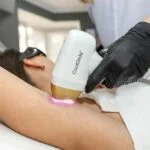
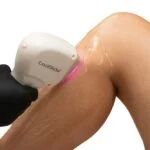
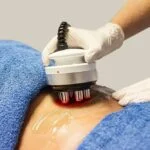
These studies didn’t test our machine. Our CoolGlide laser combines four wavelengths with a chilled sapphire tip, so your doctor can set it for your skin.
Myth 3: It damages your skin
Used well, it doesn’t. Most side effects are short-lived and minor, and lasting problems are very uncommon. The two largest studies in one review found no long-term side effects or scarring.6
Real injuries do happen, so it pays to know the causes. A review of 104 publications found that complications were mostly linked to skin type, body area, the device and its settings, with most skin complications traced to operator error and patient factors.9 Recent tanning, too much energy and poor cooling all raise the risk of burns.10 Eye injuries have been reported, and that review says they can be avoided, which is why your eyes are shielded.9
Myth 4: It makes hair grow thicker
For nearly everyone, it does the opposite. Hair that returns is usually lighter and thinner.3 In the brown-skin study above, regrowth was slower and finer in 79.3% of people.7
There is a small grain of truth here. Some people do get more hair after treatment, an effect called paradoxical growth. Across 9,733 people in 22 studies, the pooled rate was about 3%. It was linked to the face and neck, and it was 0.08% elsewhere.11 At one centre treating 7,381 patients, the rate was 0.34%, and it was lower in people who used daily sun protection.12 Tell your doctor if you see this, because further sessions at adjusted settings may help.11,13
Myth 5: The pain is too much
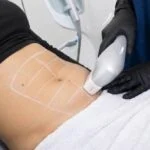
Pain is real, and usually manageable. It can feel like a series of stings, and Cleveland Clinic says it is less painful than electrolysis.3 In a study of 40 women having underarm alexandrite laser, about two thirds reported mild to moderate pain.14 The device matters too: Nd:YAG had the highest pain scores in one review.9 Cooling helps, and our CoolGlide tip chills the skin throughout. Tell your doctor if a session feels too hot, because the settings can be changed.
Who should wait or avoid it?
We don’t use laser in pregnancy, over sunburn or a recent tan, or on infected skin. It also won’t work on grey, white or very light hair. Please mention cold sores, keloid scars or recent isotretinoin first, so your doctor can plan your sessions safely.
How do I keep my treatment safe?
- Ask who will treat you, and which laser they will use on your skin tone.
- Keep your skin free of tan, and protect it from the sun afterwards.
- Follow the aftercare, and report blisters or dark patches early. Our guide to laser hair removal side effects explains what’s normal.
Still unsure? You can talk to a doctor before you decide. Consultations for this are free at all 12 of our clinics, and you can ask for a female doctor. Read about laser hair removal, and see our pages on laser hair removal in Islamabad and laser hair removal in Hyderabad.
Medically reviewed by Dr Sadaf Saleem, Dermatologist, FCPS (Dermatology), PM&DC 62494-P; Dr Junaid Rabbani, Dermatologist, PM&DC 44510-S; and Dr Shegref Mushtaq, Dermatologist, FCPS (Dermatology), PM&DC 19827-N
- American Academy of Dermatology. Laser hair removal: Overview.
- Ghorbani F, et al. Laser hair removal complications and the associated risk factors at a tertiary dermatology center. Lasers Med Sci, 2024.
- Cleveland Clinic. Laser hair removal.
- Agaoglu E, et al. Attitudinal trends and misconceptions of laser hair removal among the dermatology patients. J Cosmet Dermatol, 2025.
- Ash C, et al. Lasers and intense pulsed light (IPL) association with cancerous lesions. Lasers Med Sci, 2017.
- Lim SP, Lanigan SW. A review of the adverse effects of laser hair removal. Lasers Med Sci, 2006.
- Rao K, Sankar TK. Long-pulsed Nd:YAG laser-assisted hair removal in Fitzpatrick skin types IV-VI. Lasers Med Sci, 2011.
- Ahmed SA, et al. Efficacy of intense pulsed light vs. triple wavelength diode laser in hair reduction. J Coll Physicians Surg Pak, 2026.
- Mallat F, et al. Adverse events of light-assisted hair removal: an updated review. J Cutan Med Surg, 2023.
- Nguyen L, et al. Complications of laser and energy-based procedures in dermatology. J Dtsch Dermatol Ges, 2026.
- Snast I, et al. Paradoxical hypertrichosis associated with laser and light therapy for hair removal. Am J Clin Dermatol, 2021.
- Inoue Y, et al. What are the factors that induce paradoxical hypertrichosis after laser hair removal? Aesthet Surg J, 2024.
- Goel A, Rai K. Methods to overcome poor response and challenges of facial laser hair reduction. J Clin Aesthet Dermatol, 2022.
- Shurrab K, Nassr MA. Long-term efficacy and safety of 755-nm alexandrite laser for axillary hair removal. JMIR Dermatol, 2025.
Treatments in this article
Sessions, downtime and results for each, on its own page.

Related articles



Ready when you are
Book your free consultation
A doctor checks your skin, hair or body first. No obligation.











 Meet our 46 doctors
We usually reply within 15 minutes.